Permanent Christmas lights for metro Atlanta homes
One install, then lights whenever you want them: warm white through December, orange the last week of October, team colors on a Saturday, low accent light the rest of the year. Slim LED channel mounts once under the eave line in a color matched to your trim and reads as fascia during the day. Christmas Lights North Atlanta designs, installs, and programs these systems across metro Atlanta, February through September. Quotes are free, written, and itemized.
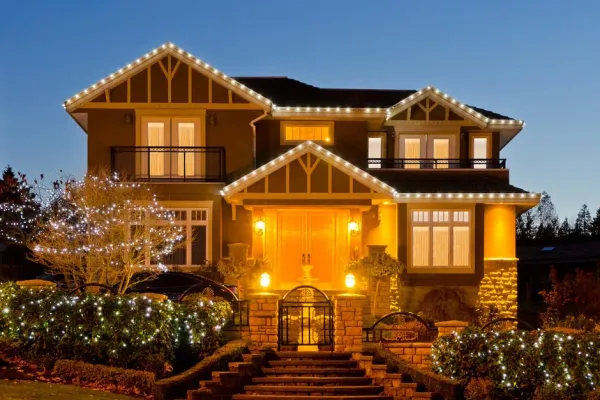
Lights that stay up all year and still disappear by daylight
A permanent system replaces the November routine with a phone app. Instead of strands hung in the fall and pulled in January, a rigid channel is mounted once along the eave line, screwed into the fascia on a set spacing and color-matched to the trim so it reads as part of the house. Inside the channel sit individually addressable LED diodes. What they do after dark is a settings choice: warm white for Christmas, a low architectural wash on an ordinary Tuesday, purple for Halloween week, or off entirely.
Daytime appearance is the whole test of an install like this. A good one follows the fascia line without waving, keeps every wire behind the channel or inside the soffit, and lands the controller somewhere sensible, usually in the garage or a covered exterior box near an outlet. From the curb in July there is a clean line under the eave and nothing else. That is what separates a professional install from the adhesive strip kits sold online, which sag off in the first Georgia summer and fade unevenly after two.
Christmas Lights North Atlanta started in Cumming in 2018 and has lit more than 7,500 properties. The permanent work runs across metro Atlanta, and the architecture decides the plan: long straight fascia runs on newer Cumming builds are the fastest and cleanest jobs, brick two-stories with deep returns and dormers around Buckhead take more cutting and planning, and the low ranch rooflines common in Smyrna put the channel close enough to eye level that trim color matching matters more than usual. The city pages for Peachtree City, Holly Springs, Flowery Branch, and Tucker each answer the permanent-lighting question for the homes there.
Quotes are free, written, and itemized, and they are built from measurement: total eave and fascia footage in the design, the number of returns and corners, peak height and roof access, fascia condition, and where power and the controller can land. If you want the comparison, we will quote a seasonal display on the same visit so you can read both plans side by side before deciding. Call or text (470) 777-7443 or send photos of the front and both sides of the house through the contact form.
One roofline, every occasion
Presets cover the calendar: Christmas, New Year's Eve, Valentine's Day, the Fourth of July, Halloween, Thanksgiving, and any Saturday your team plays. You can build your own scenes too. Because each diode takes its own color command, patterns can chase along the eave, fade slowly, twinkle at random, or simply hold one warm white the whole month.
Built for Georgia weather
Sealed channel and commercial-grade diodes handle summer humidity, pollen season, and the occasional ice event without coming down. Rated lifespans run 50,000 hours and up, which is years of nightly use. Nothing has to be re-clipped after a February wind event, because there is nothing hanging in the first place.
Invisible by day
Channel comes in trim-matched colors and mounts flush under the eave with the wiring hidden behind it. Unlit, from the street, it reads as fascia. This is the detail HOA architectural committees ask about first, and the one that most often decides whether a permanent system gets approved on the first submission.
Phone control, no ladders again
Schedules, scenes, and brightness live in an app on your phone. Set the system to come on at dusk and shut off at midnight and then leave it alone for a year. If a section ever misbehaves, we service what we install, and a scene change is a settings edit rather than a truck roll.
How a permanent lighting install goes
It starts with a design visit at the house, or from photos if the roofline is straightforward. We measure the eave and fascia footage run by run, count corners and returns, note peak height and roof pitch, and check the fascia itself, because rotted board gets repaired before anything is fastened to it. Two-story foyer peaks and steep gables change the plan more than overall square footage does.
You get a written, itemized quote listing each run and each element separately, so the design can be trimmed without starting over. Once you approve it, most homes install in a single day, with large or complex rooflines running into a second. Channel is cut on site, matched to your trim color, fastened to the fascia on an even spacing, and wired back to a controller placed near an outlet or in the garage on a circuit that stays powered.
Before the crew leaves, the app is on your phone, your first few scenes are built and saved, and every section has been run through a full color test from the street. After that the system runs itself. New scenes for a new occasion are a settings change on your end, not a service call.
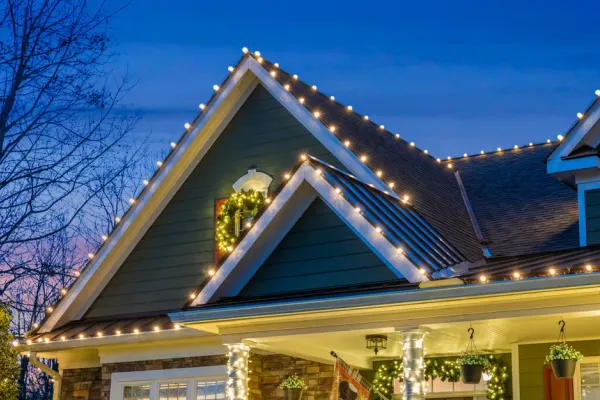
What a permanent system does that strands cannot
Seasonal strands do one look for six weeks. A permanent system does hundreds, on any night of the year. Individually addressable diodes mean each point of light takes its own color command, so the same eave line runs warm white on Christmas Eve, red and white the next morning, and a slow amber fade on a January evening with nobody on a ladder in between.
Brightness is the underrated part. These diodes are made for architectural use, so everyday accent light can sit low, around a fifth of full output, and read as landscape lighting rather than a holiday display. Then the holiday scenes run at full power. Motion looks deliberate when it is slow: gentle fades, section-by-section sweeps, a light twinkle. Fast chases are available and mostly get used once.
There is no install date and no takedown date, which is the practical difference. The house is ready for a birthday, a graduation party, or a neighborhood event the same evening you think of it. What a permanent system does not do is wrap trees, hang wreaths, or light a walkway, so some homeowners run permanent eaves plus a small seasonal package for greenery. Our full installation service covers that side.
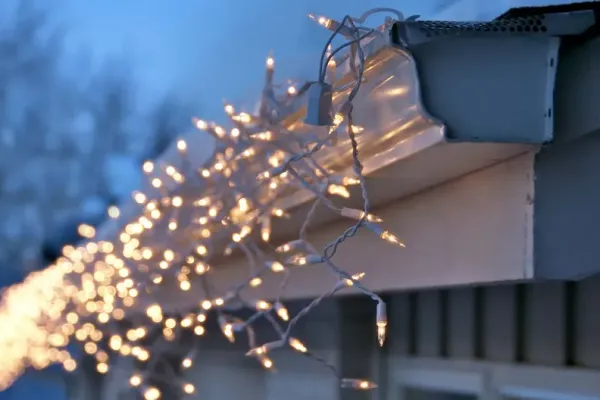
Permanent and seasonal, compared honestly
We install both, so there is no reason to push you toward one. Seasonal displays make sense for a lot of homes. Nothing is fastened to the house, the design can change every year, wreaths and garland and trunk wraps are part of the package, and the fat faceted C9 bulb look is genuinely hard to reproduce with channel systems. Everything in a seasonal package sits under one number that already includes product, install, in-season service, and January takedown.
Permanent systems make sense when the habits line up: you plan to stay in the house, you want light on the eaves more than six weeks a year, and you would rather not schedule anything in November. They handle rooflines very well and nothing else at all.
The way to decide is to see both plans written down for your actual house. Ask for the seasonal quote and the permanent quote on the same visit, itemized, and read them next to each other along with what each one includes over the years you expect to stay. The cost page walks through the factors we measure on the seasonal side, and the same measurement discipline applies to permanent work.

Where we install permanent lighting
Permanent lighting covers the same metro Atlanta territory as our seasonal work, from the north Atlanta suburbs where the company started to in-town neighborhoods, out through Cobb and Gwinnett, and south and west of the perimeter. Crews route in geographic clusters during install season, but off-season permanent work is scheduled with much more flexibility, which is one more reason February through September is the right window.
Housing stock shapes the job more than address does. Newer builds with long uninterrupted fascia are the fastest installs and the cleanest lines. Older homes with deep eave returns, dormers, and multiple roof planes take more cutting, more corners, and more planning time. Historic properties need a gentler mounting approach and sometimes a different fastener, decided during the design visit rather than on the day.
If a patio, pergola, or covered porch is part of the picture, that is a separate system and a different technique, run on guide wire rather than channel. Our patio and bistro string light service covers that, and plenty of homeowners do both in the same off-season week.
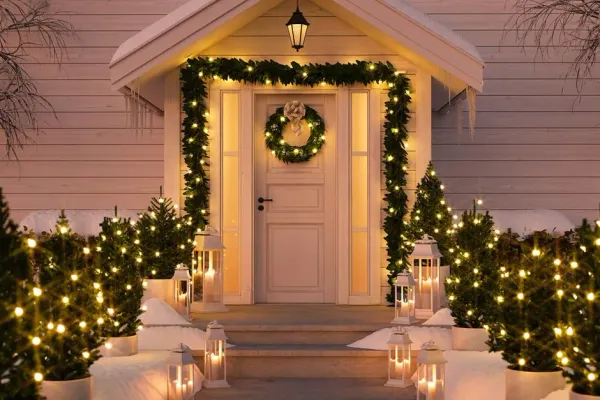
Permanent lighting questions from metro Atlanta homeowners
What people ask before switching from seasonal strands to a permanent system.
How is a permanent lighting quote put together?
From measurement, not from a chart. We count eave and fascia footage along every run in the design, count corners and returns, note peak height and how the roof can be reached, check fascia condition, and find a spot for the controller near power. Every element lands on its own line in a free written quote, and we will price a seasonal display alongside it if you want both numbers.
Permanent system or a seasonal package: which suits my house?
Seasonal work still wins if you want the classic C9 bulb look, if you like changing the design every year, or if trees, wreaths, and garland matter as much as the roofline. Permanent suits homeowners staying put who want light for more than six weeks a year and are tired of the November scramble. Plenty of our customers run both: permanent on the eaves, seasonal for greenery.
Can you install in spring or summer?
That is the best time to do it. Permanent installs run February through September, when the calendar is open and no part of the job competes with seasonal crews. Systems booked after October compete with install season for crew time. An off-season install also means the house is ready in November without anyone touching a ladder.
Will my HOA approve it?
Usually, because the channel is low-profile and matched to your trim color. Some communities want an architectural request form with a product photo and the trim color noted before work starts, and a few restrict visible hardware on street-facing elevations. Tell us the neighborhood at the quote stage and we will tell you what the submission normally needs before anything is ordered.
What about the strip kits sold online?
Consumer kits use adhesive backing or exposed clips, diffuse poorly so you see individual dots rather than a line of light, and tend to fade unevenly after a couple of Georgia summers. Professional systems use rigid trim-matched channel mechanically fastened to fascia, commercial diodes, hidden wiring, and a controller on a protected circuit, plus someone to call when something acts up.
Does it work on any roofline?
Most of them. Straight fascia runs are simple. Deep returns, dormers, arched entries, and steep gables take more cutting and more planning, and stone or stucco facades without a fascia board need a different mounting approach. We look at all of that during the design visit rather than improvising from a ladder on install day.
Get a permanent lighting quote for your roofline
One install, every season after. Call or text (470) 777-7443, or send photos of the front and sides of your house through the contact form, and a free written, itemized quote usually comes back within one business day. We will price a seasonal display alongside it if you want the comparison. Off-season installs run February through September and book fastest.
Get a free quote for your house
Text us a photo of the front of the house and your address, call, or fill out the form. You get a written, itemized quote, usually within one business day.