Tree wrapping and landscape holiday lighting across metro Atlanta
Trunk wraps on the maples at the driveway, minis through the shrub line, stakes down the walk, and rated cord run so nothing crosses the lawn. Christmas Lights North Atlanta has been wrapping trees since 2018 and has lit more than 7,500 properties. Commercial-grade LEDs supplied and cut to length, timers set before the crew leaves, in-season service at no charge, January takedown included. Quotes are free, written, and itemized.
Why wrapped trees carry a yard the way a roofline cannot
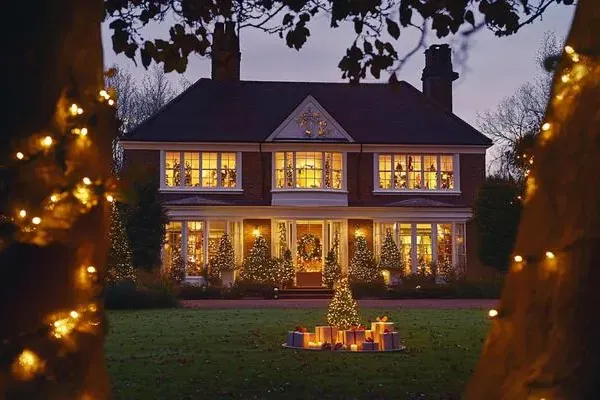
A lit roofline draws the outline of a house. Wrapped trees fill the space in front of it. That is the difference people notice from the street without being able to name it: the yard has depth, the light sits at three or four heights instead of one, and the display reads from an angle rather than only head on. On lots with mature hardwoods, two wrapped trunks often do more than another hundred feet of roofline would.
Wrapping is also the part of holiday lighting most likely to go wrong when it is done in a hurry. Spacing drifts wider as the ladder gets higher, so the trunk looks dense at the bottom and thin at eye level. Line pulled tight around a young trunk digs in as the tree moves in wind. Runs started at the base leave the plug end fifteen feet up. We wrap from a plan: spacing chosen for the trunk, line run with a little slack, terminations kept low and dry.
Christmas Lights North Atlanta started in Cumming in 2018 and now works across metro Atlanta, and the planting changes as you move around the map: mature water oaks and river birches on older lots in Roswell, tight foundation beds and young ornamentals in newer Johns Creek subdivisions, and big front-yard maples on the ranch streets of Marietta. Our pages for Brookhaven, Vinings, Lilburn, and Powder Springs cover wooded lots with hardwoods worth wrapping. Each tree gets sized before it gets a spool assigned to it.
Every quote is free, written, and itemized, built from what we measure: trunk circumference and the height we can safely reach, the number of shrubs and their spread, pathway length, and how dense you want the wrap. Call or text Christmas Lights North Atlanta at (470) 777-7443 or send photos of the yard through the contact form, and a written quote usually comes back within one business day. Book by November 1st for the 10% early-bird discount, since the two weeks before Thanksgiving fill first.
Spacing set by the trunk, not by the spool
Trunk circumference decides the plan. A maple measuring forty inches around takes far more line at four-inch spacing than a crepe myrtle at twelve inches does, so we measure first and assign footage before the ladder goes up. Tight spacing makes a trunk glow as a solid column; wider spacing reads as a spiral. Both are valid, and the choice gets made on paper.
Wrapped with slack, never cinched
Line goes on snug enough to stay put through a January wind and loose enough that nothing bites into bark. Cord is never stapled, nailed, or zip-tied to a trunk. In January the crew unwinds from the top down, which is slower than pulling from the bottom and the only method that leaves small branches intact.
Shrubs, beds, and the walk
Net lights drop over a boxwood or holly and give even coverage across a long foundation bed in one motion. Minis hand-wrapped over a shrub look fuller and take longer. Pathway stakes go in on even spacing with the cord tucked under mulch, set back far enough from the edge that a mower in March never finds them.
Power planned before the first tree
Trees at the back of a lot need rated outdoor cord run to them, split across separate feeds so a long chain does not dim at the far end. Runs are tucked along bed edges rather than crossing a walkway, connections are kept up off wet ground, and every circuit lands on a GFCI-protected outdoor outlet through a timer.
How a tree gets wrapped, step by step
Measure. Circumference at chest height, the reachable height, and the limb structure. Those three numbers set the footage and the spacing, and they go on the itemized quote as their own line so you can see what each tree adds.
Cut and prep on the tailgate. Minis come off the spool at the measured length with the plug end where it needs to be, which is at the base near the feed, not fifteen feet up with nothing to plug into.
Wrap from the bottom. The line goes around the trunk in even spirals, spacing held by hand rather than by eye, with the crew moving the ladder rather than leaning off it. Spacing near four inches reads as a solid column of light. Six to eight inches reads as a candy-cane spiral and uses noticeably less line.
Carry it into the limbs. Where the structure allows, the wrap continues out along two or three main limbs so the tree keeps its shape after dark instead of ending in a lit stump.
Terminate low and dry. Connections sit above the mulch line and out of standing water, joined and secured so a January storm does not pull them apart. Then the feed runs back to a timer on a GFCI-protected outlet, and the whole yard gets walked from the street before the truck leaves.

Shrubs, pathways, and the rest of the landscape
Foundation beds are where a display either holds together or falls apart. Net lights over boxwoods, hollies, and azaleas give even coverage fast, and they suit rounded shrubs of similar size. Hand-wrapping the same shrub with 5mm minis takes longer and looks fuller, especially on loose or irregular plants where a net would tent across the top and leave the sides dark. Ornamental grasses take nothing at all; they swallow light and shed it by February.
Pathways get ground stakes on even spacing, cord tucked under mulch and set back from the edge so spring mowing never finds a wire. Split-rail and picket fencing takes a run along the top rail. Porch columns take a mini wrap or a garland with light woven through it. Arbors and pergolas take the same treatment as a column, worked from a step ladder.
The point of landscape lighting is layering. Roofline light sits at one height. Trees add a second layer. Shrubs and stakes add a third at eye level, which is what makes the yard look finished rather than outlined. The residential page shows how those layers stack on a typical home package.

Big trees, small trees, and the honest limits
Front-yard hardwoods are the best value in landscape lighting. A single wrapped water oak at the curb changes the whole street view, and it takes one crew a fraction of the time a full roofline does. What we light is the trunk and the first main limbs, worked from extension ladders set on levelers with a second crew member footing them. That is the honest limit, and it is the right one: wrapping a fifty-foot canopy from a ladder is how people get hurt.
Small and mid-size trees are a different job. Crepe myrtles, Japanese maples, and young river birches can be wrapped trunk to branch tips, which is why a row of them along a drive reads so well. Evergreens and tight conifers take draped strands worked from the outside in rather than spiraled, since a wrap disappears into the needles.
Bare winter trees are not a problem. Deciduous trunks and limbs actually show a wrap better with the leaves down, because nothing hides the line. We plan for the leaf drop in October rather than being surprised by it in December.
Holding up through a metro Atlanta December
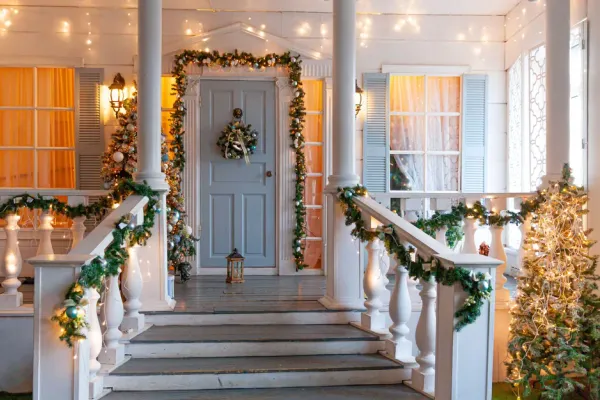
A Georgia December brings a week of rain, a couple of hard freezes, and every few years an ice event. Wrapped trees take the worst of it because they move. Our answer is slack in the line, terminations kept off wet ground, cord rated for outdoor use rather than an indoor extension run, and LED bulbs that run cool enough to sit against wet bark all season.
If something does go dark, it is a phone call and not an invoice. In-season service calls are at no charge, and the crew carries spare cord, bulbs, and stakes. Most outages in a yard trace to a tripped GFCI after a heavy rain, a timer knocked off schedule by a power blip, or a stake pulled loose by a dog, and all three get fixed on the spot.
January takedown is included. Wraps come off top down, runs are coiled and tagged by location, and the beds get walked for stakes and clips before the crew leaves. Our takedown page covers how January works, including for displays somebody else hung. Patios, tents, and one-night events run on a different set of rules, mostly guide wire and anchor points, and that work lives on the wedding and event lighting page.

Questions about tree wrapping and landscape lighting
What metro Atlanta homeowners ask before booking.
How are trees actually wrapped?
We measure the trunk, choose a spacing, and wrap in even spirals from the base up as far as a ladder can safely reach, then carry the line out along the main limbs where the tree allows. Oaks with heavy low limbs take a different path than an upright crepe myrtle. Line goes on with slack so nothing constricts the bark as the tree moves.
Will wrapping hurt the tree?
No, when it is done correctly. Nothing is stapled, nailed, or tied into the trunk, and the line is wrapped loosely enough to move with the tree instead of digging in. LED bulbs run cool, so they sit against bark and needles without drying anything out, and everything comes off in January rather than being left to girdle a growing trunk.
Can you light trees far from an outlet?
Usually yes. We map the outdoor outlets during measurement and run rated outdoor cord to reach the tree, tucked along a bed edge or under mulch rather than across a walkway. Long chains are split into separate feeds from different circuits so the far end does not dim. If the nearest outlet is not GFCI protected, we tell you before install day.
How high up the tree do the lights go?
As high as a ladder can be safely footed and worked, which on most front-yard hardwoods means the trunk plus the first main limbs. That is also where wrapping does the most visual work, since the lit column reads from the street. Tall canopies are left alone rather than worked from unsafe positions, and small ornamentals can be wrapped or draped throughout.
When should I book tree wrapping?
By November 1st for the 10% early-bird discount and first pick of install dates. Wrapping is slower per element than roofline work, so tree-heavy yards are scheduled early in the window. Install season runs late October through mid-December, Monday through Saturday, and the two weeks before Thanksgiving are the first dates to go every year.
Is removal included?
Yes. January takedown is part of every package, and wraps come off top down so branches are not stripped. Each run is coiled, tagged by location, and either boxed for your garage or taken with the crew if you add labeled storage. In-season service calls are at no charge if a run goes dark before then.
Get your trees and landscape quoted for free
Call or text (470) 777-7443, or send photos of the yard through the contact form, and a written, itemized quote usually comes back within one business day. Trunk wraps, lit shrubs, pathway stakes, timers, in-season service, and January takedown all sit inside one package. Book by November 1st and save 10%.
Get a free quote for your house
Text us a photo of the front of the house and your address, call, or fill out the form. You get a written, itemized quote, usually within one business day.