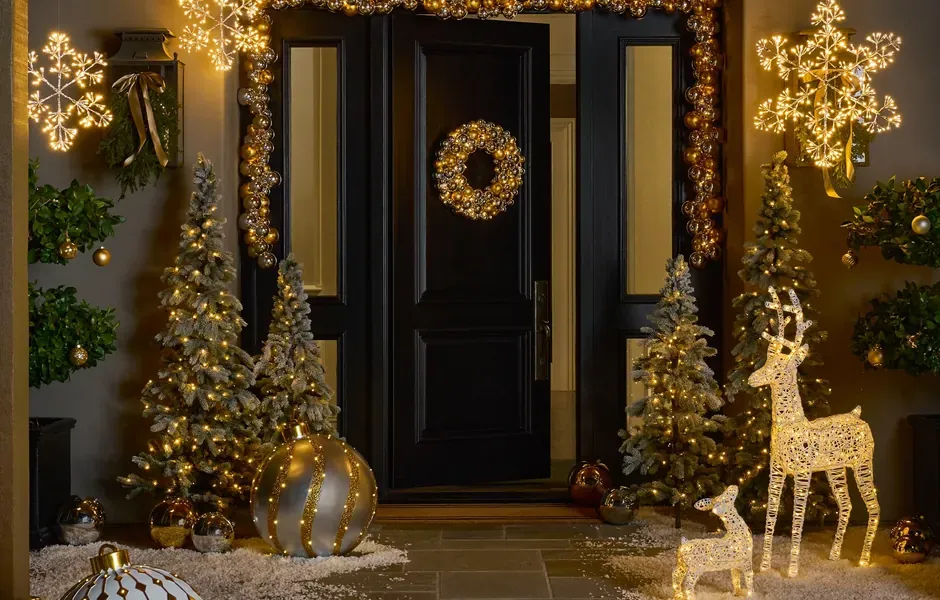
Professional Christmas light installation is worth it for most two-story homes across metro Atlanta, and usually not worth it for a single-story ranch owned by someone who enjoys the project. That is the short answer. DIY costs $200 to $400 in retail product plus a full weekend, and you carry the ladder risk and every mid-season repair yourself. Professional installation is quoted from your measured roofline, home height, trees, and design density, and that all-inclusive number covers the lights, the labor, in-season maintenance, January takedown, and storage.
The professional side scales in a predictable order. A basic single-story roofline is the smallest job. The typical two-story home, which is most of what we install across Alpharetta, Roswell, and Johns Creek, sits in the middle. Large properties with long rooflines, wrapped trees, and wreaths sit at the top, and every one of them gets a free itemized quote built from measured footage rather than a chart. We have hung lights on 7,500+ homes since 2018, and a fair number of those homeowners could have done a respectable job themselves. The point of this comparison is telling the two groups apart, honestly, in both directions. If you want the short version first, our DIY or pro tool asks five questions about your house and gives you a lean.
What does DIY really cost once you add everything up?
Start with the receipt. Enough retail C9 or mini light strings to cover a typical roofline and a few bushes costs $200 to $400 at any big-box store. Then come the parts nobody budgets for: gutter clips, shingle clips, outdoor-rated extension cords, a photocell timer, spare fuses. Call that another $50 to $100 in the first year.
The ladder is the swing item. A 6-foot step ladder handles a ranch. Reaching a second-story roofline safely takes a 24-foot extension ladder, and if you do not own one, add $200 to $300.
Then the time, which is the cost people underestimate most. A first-time install on a full roofline takes 8 to 16 hours once you count untangling, testing every string before it goes up, measuring, clipping, moving the ladder a few dozen times, and troubleshooting the section that goes dark the moment everything is plugged in. Takedown in January is another half day, usually in worse weather. None of this is a complaint. Some people genuinely enjoy the ritual, and for them the hours are part of the season, not a tax on it.
What professional installation actually covers
We quote every home individually rather than off a per-foot table, because a rate with no roofline attached misleads more people than it helps. What we can say plainly is what moves the number. Measured roofline footage is the biggest driver, then home height, then the trees you want wrapped, then design density: a roofline outlined on both the gutter edge and the peak uses close to twice the product of a single run. The lease package that comes back on the quote includes design, commercial-grade LED product we supply, installation by an insured crew, maintenance all season, takedown in January, and storage until next year. Tree and shrub wraps are itemized per tree on the same quote. Installs run late October to mid-December, and the quote is free, requested by phone or photo, and usually answered within one business day.
Here is the whole comparison in one table:
| Line item | DIY | Professional |
|---|---|---|
| Lights | $200 to $400, retail grade | Commercial-grade LED, included |
| Clips, cords, timer | $50 to $100 | Included |
| Ladder | $0 to $300, depending on what you own | Crew equipment |
| Installation | 8 to 16 hours of your weekend | Roughly 4 to 8 crew hours, none of them yours |
| Mid-season repairs | You, on a ladder, in December | Included |
| Takedown and storage | A January afternoon plus garage shelf space | Included |
| First-season total | $250 to $800 plus your time | Free itemized quote |
Two honest notes on that table. DIY gets cheaper in year two because the hardware is already bought, though retail strings rarely survive more than a few seasons, so the product line never quite reaches zero. And the professional column has no number in it because homes are a wide range: 90 feet of walkable roofline prices very differently from 250 feet of steep gables with two wrapped maples, which is why the quote is built from your measured footage instead of a chart.
How dangerous is hanging your own lights?
This is the part of the comparison most people skip, so we will not. The U.S. Consumer Product Safety Commission tracks holiday decorating injuries, and the totals run into the thousands of emergency room visits every November and December. Falls account for roughly half of them, and ladders are involved in most of the falls.
The risk is not evenly spread. Lights along a porch rail or across a row of shrubs carry almost none of it. A single-story eave from a step ladder is manageable for anyone careful, ideally with a helper footing the ladder. The injuries concentrate exactly where metro Atlanta housing stock concentrates: two-story rooflines, gables over garages, and the spot where a fully extended ladder leans against a gutter while you work one-handed in the cold. If your display plan includes that spot, weigh it seriously. A professional crew handles that section every day with the right equipment, and our insurance, not your health plan, covers the work.
Why do retail strings fail faster than commercial-grade?
The $30 box and the commercial string are different products wearing the same shape. Retail strings use thinner wire, lightly sealed sockets, and bulbs that are not designed to be serviced. Water finds the sockets, one bad section takes out a run, and by the second or third season you are back at the store hunting for the same color temperature you bought last time. Commercial-grade LED strings use heavier gauge wire, gasketed sockets, and replaceable bulbs, and they routinely run 15 to 20 seasons in service.
That gap explains most of the sticker shock. A professional quote is not a labor bill for hanging your $300 of lights. It covers a different product class, the labor, and a promise that a dark section in December is our problem, fixed on our ladder, at no charge.
The middle path: your lights, our ladders
There is an option between the extremes. If you would rather own commercial-grade lights, we sell the product upfront, itemized on your quote for your exact design, and charge a lower install-only rate each season. You replace product as it wears out, we handle the roof, and we still store the lights between seasons unless you would rather keep them. It suits people who like owning things and plan to keep the same design for years. The lease versus buy guide runs both models side by side, and the cost factors page covers what moves either number. Know the option exists before assuming DIY is the only way to spend less.
When we would honestly tell you to DIY
We would rather say this plainly than pretend every house needs us:
- Your home is single-story with a walkable roofline, or the whole display lives at ground level: bushes, porch posts, window frames, a lit wreath.
- You own a proper ladder, you are steady on it, and someone is home to foot it.
- You actually enjoy the work. Plenty of people do, and it shows in their displays.
- Your whole budget is under a few hundred dollars. A display you love from a box beats no display at all.
- You rent, and investing in equipment for someone else’s house makes no sense.
If several of those describe you, do it yourself with our blessing. Buy LED rather than incandescent, pick the best strings you can find, and put everything on a timer.
Where professional installation earns its price
The other direction, with the same bluntness:
- Anything above one story. Height, not design, is the most common reason homeowners call us.
- Tree wraps. A properly wrapped trunk and canopy takes hours and several hundred feet of product, and it is the highest-impact element in most front yards.
- Maintenance. Six weeks is a long time for retail strings to behave. With an installed display, outages get found and fixed without you climbing anything.
- Time. If there is no free weekend between Halloween and Thanksgiving on your calendar, the decision has quietly made itself.
- Finish. Straight lines, even spacing, and a palette matched to the brick or trim are what make a display read as professional from the street.
So is professional Christmas light installation worth it?
For a two-story metro Atlanta home where the alternative is a rented ladder, a lost weekend, and retail strings replaced every couple of seasons, yes. You are buying back six weeks of not thinking about it. For a ranch with an owner who likes the ritual, no, and we will say exactly that if you ask on the phone.
If you want a firm number for your own house, send a photo of the front of it through the contact form or call or text (470) 777-7443, and every installation quote is free and itemized line by line. Book by November 1st and the early-bird discount takes 10% off. The pre-Thanksgiving calendar fills first, every year, and the FAQ answers the scheduling and weather questions that come up next.
What people ask before deciding DIY or pro
Is professional Christmas light installation worth it for a one-story house?
Often not, if you own a decent ladder and enjoy the work. A walkable single-story roofline, porch rails, and shrubs are the safest do-it-yourself jobs there are. The calculation flips on two-story rooflines, gables over garages, and wrapped trees, where the height and the hours are what homeowners are actually paying to hand off.
How long does it take to hang your own Christmas lights?
Plan on 8 to 16 hours for a first full-roofline install, counting untangling, testing every string before it goes up, measuring, clipping, and moving the ladder several dozen times. Takedown in January costs another half day, usually in worse weather. Year two runs faster, because the hardware is bought and the layout is already known.
Why do store-bought light strings fail so fast?
Thinner wire, lightly sealed sockets, and bulbs that were never meant to be serviced. Water finds the sockets, one bad section takes out a run, and by the second or third season you are back at the store matching color temperature. Commercial-grade strings use heavier wire, gasketed sockets, and replaceable bulbs, and routinely run 15 to 20 seasons.
Can I buy commercial-grade lights and still hire a crew?
Yes. That middle path itemizes the product on your quote for your exact design, you pay for it upfront, and each season you pay a lower install-only rate for the crew to hang, test, maintain, and remove it. Replacement bulbs and failed sections move to your side, and we still store the lights between seasons unless you would rather keep them. It suits owners staying put with a design they already like.
What is the most dangerous part of a do-it-yourself install?
The ladder, not the clips. Holiday decorating sends thousands of people to emergency rooms every November and December, falls account for roughly half of those, and ladders are involved in most of the falls. The risk concentrates at a fully extended ladder leaning on a gutter while you work one-handed in the cold.
Related articles
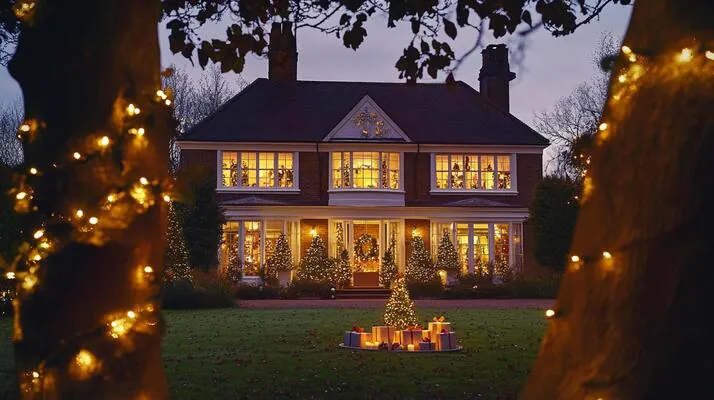
How Much Does Christmas Light Installation Cost in Atlanta? (2026)
Sep 2, 2026
Lease or Buy Your Christmas Lights? How the Two Models Work in North Atlanta
Sep 2, 2026
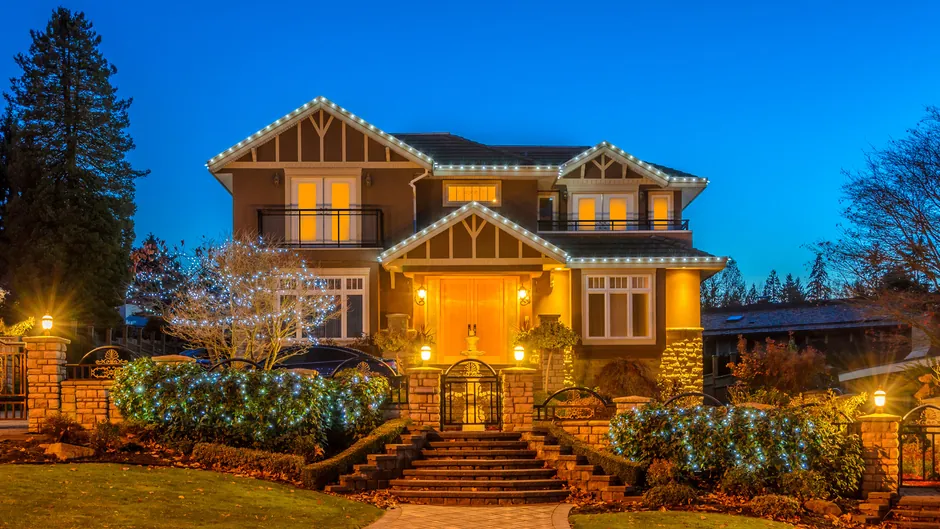
Planning Christmas Lights for an Alpharetta Home: HOA Rules, Rooflines, and Timing
Aug 15, 2026