Christmas Lights Won't Turn On At All: Check the Fuse First
An entire string is dead - not a section, the whole thing - while other strings on the same run are fine.
The short answer
Slide open the little door on the flat blade of the plug: there are one or two glass fuses inside, and a blown one looks exactly like a dead string. Replace it with the same amperage - almost always 3A - and most 'dead' strings come straight back to life. If the fuse is intact, work outward: test the outlet, then the cord feeding it, then the string itself.
What is actually causing it
In the order we find them, most common first.
-
1.A blown fuse in the plug
most commonHow to check: Slide the small cover on the flat prong side of the plug. Hold the glass fuse to the light: a broken filament or a smoky, blackened tube means it has blown.
The fix: Put in a replacement of the same rating, printed on the metal end cap and almost always 3A, 125V. Never use a higher-rated fuse - it is protecting the string from a fault, and a bigger fuse just lets that fault get worse.
-
2.The outlet is dead or its GFCI has tripped
Free to fix most commonHow to check: Plug something you know works into the same outlet, or press its reset button. Outdoor outlets are often on the same GFCI as a garage or bathroom outlet somewhere else entirely.
The fix: Reset the GFCI or the breaker. If it will not hold a reset, you have a different problem - see the guide on GFCI tripping.
-
3.The timer or smart plug is the thing that failed
Free to fix commonHow to check: Bypass it. Plug the lights straight into the outlet. If they light, the controller is at fault, not the string.
The fix: Check the timer's own settings and its photocell first - a sensor in shade thinks it is still daylight. Replace the unit if it will not pass power when bypassed.
-
4.A damaged or failed extension cord
Free to fix commonHow to check: Swap in a different cord, or plug the string directly into the outlet to take the cord out of the equation.
The fix: Retire any cord with a nicked jacket, a loose plug, or scorching at the pins. Cords fail more often than people expect, especially after being run over or pinched in a door.
-
5.A break in the string's own wiring
less commonHow to check: Look for cuts, staple holes and crush points, particularly near either end where the wire flexes most.
The fix: Cut-to-length C9 runs can be repaired by fitting new plugs on either side of the damage. A molded retail string with broken wire is finished.
Working outward from the plug
- 1
Check the outlet first
Plug in something you know works, or use an outlet tester. There is no point diagnosing a string that is not being fed any power, and a tripped GFCI somewhere else in the house is a very common cause.
- 2
Take the timer out of the picture
Plug the lights directly into the outlet, skipping any timer, smart plug or cord. This tells you in ten seconds whether the fault is the string or everything upstream of it.
- 3
Open the plug and inspect the fuse
Slide the cover on the flat prong face. Most plugs hold two 3A glass fuses. Hold each to the light - a break in the tiny filament, or blackened glass, means it has blown.
- 4
Use the correct replacement
Match the amperage stamped on the fuse cap, normally 3A at 125V. Using a higher rating is genuinely dangerous: the fuse exists to fail before the wire does.
- 5
If the new fuse blows immediately, stop
A fuse that goes straight back out is reporting a real short in the string. Do not keep feeding it fuses. That string is done, and continuing to power it is the actual fire risk in this whole article.
- 6
Still nothing? Test the cord
Swap the extension cord for one you trust. If the string then lights, retire the cord rather than working around it.
There is a particular kind of frustration in a string that does nothing at all. A section going dark suggests a bulb; total silence suggests the whole thing is scrap.
Usually it is not. Usually it is a component most people do not know exists.
The fuse nobody knows about
Nearly every set of Christmas lights sold has fuses built into the plug. Look at the flat face of the plug (the side the blades come out of) and you will find a small sliding door, often needing a fingernail or the tip of a small screwdriver. Behind it sit one or two glass cartridge fuses.
They blow. That is their job. A momentary surge, a damp connection, one too many sets chained together, and the fuse gives out to protect the wire behind it. From the outside the string looks completely dead, indistinguishable from one that has actually failed.
We have lost count of the perfectly good strings that get thrown away over a component worth a few cents.
Work outward, not inward
The mistake people make is starting at the lights. Start at the wall instead and move outward: outlet, then controller, then cord, then plug, then string. Each step takes seconds and eliminates a whole category of cause.
More than once we have arrived at a house for “all the lights are dead” and found a GFCI tripped in a garage on the other side of the building, feeding the outdoor outlet nobody associated with it.
The one place to stop
If you put in a fresh fuse and it blows the moment you plug in, put the string down.
That is not bad luck and it is not a defective fuse. It is a short circuit, and the fuse is doing precisely what it was designed to do. Feeding it another fuse, or worse a bigger one, is how a dead string becomes a fire. Retire it.
If the string was commercial-grade and cut-to-length, a damaged span can be cut out and re-plugged; our socket wire guide covers how the ends are made. If it was a molded retail string, its life is over.
As an Amazon Associate, Christmas Lights North Atlanta earns from qualifying purchases. We list these because they fix the problem above; where the fix is free, we have said so.
Spare fuses
The fuse hidden in the plug is the single most common reason a whole string is dead, and a blown one looks identical to a broken string. Check this before you throw anything away.

smseace 3A Christmas Light Fuses 20Pack 3A 3AMP 125 Volt Fuse 0.14 x0.39…
The fuse that lives in the plug of most light strings, twenty for the price of a coffee. A blown fuse looks exactly like a dead string, and this is the first thing to check before you throw anything away.
$4.99
See it on Amazon
VEXUNGA 5 Values 100 Pcs 125V Christmas Light Fuses Kit 5x20MM 3A 5A 125…
A five-value assortment covering both common fuse sizes. Buy this one if you do not know which fuse your strings take, which is most people until they open a plug.
$9.99
See it on AmazonCheck the outlet, not just the lights
Before you condemn a string, confirm the socket is live and wired correctly.
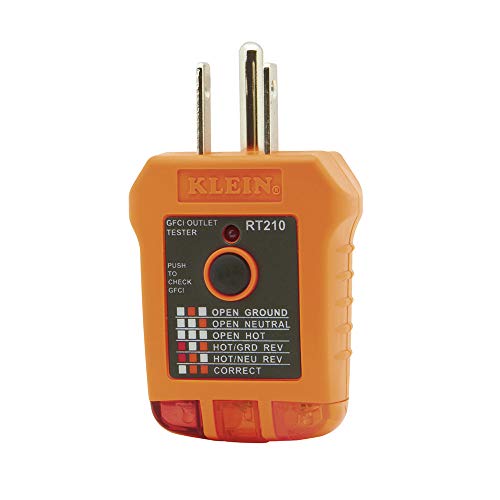
Klein Tools RT210 Outlet Tester
Plugs into the outlet and tells you in one second whether the fault is your lights or the socket they are in. Half the 'my lights are broken' calls we get are an outlet with a tripped GFCI or a wiring fault.
$13.98
See it on AmazonTesters and repair tools
For faults that are neither the fuse nor the outlet.

allsun GK13 Holiday Light Repair Kit, BT20 Battery Tester & 50 Bulbs
A tester, fuse checker and non-contact voltage pen in one kit. The voltage pen is the part worth having anyway — knowing a cord is live before you handle it in the wet is basic safety.
$20.99
See it on AmazonPrices checked Sep 24, 2026 and may change.
Related questions
Where is the fuse on Christmas lights?
Inside the plug itself. One face of the plug - the flat side with the blades - has a small sliding cover, sometimes needing a fingernail or a small screwdriver to open. Behind it sit one or two glass cartridge fuses, typically 3A at 125V. Many people have never opened one, which is exactly why this is the most commonly missed fix.
What fuse do Christmas lights use?
Almost always a 3-amp, 125-volt fast-blow glass fuse, usually the 3.6 by 10mm mini size, though some sets use the larger 5 by 20mm. The rating is printed on the metal cap. Buy the size your strings actually take, or an assortment if you have a mix - and never substitute a higher amperage.
Can I use a higher amp fuse if I do not have the right one?
No. The fuse is sized to fail before the string's wiring overheats. Putting a 5A fuse where a 3A belongs means the wire becomes the weakest link instead of the fuse, which is how a minor fault turns into a burning one. If you do not have the right fuse, leave the string unplugged until you do.
My new fuse blew right away. What now?
Stop replacing it. A fuse that fails immediately is telling you there is a genuine short in the string - damaged wire, a crushed socket, water bridging contacts. The fuse is doing its job. That string should be retired, not persuaded.
Only one of my two fuses looks blown. Should I replace both?
Replace both while the plug is open. They are pennies, they have had identical service, and reassembling the plug twice in a week is nobody's idea of a good evening.
In metro Atlanta and would rather not deal with it?
We design, install and maintain displays across metro Atlanta, from Alpharetta and Marietta to Buckhead and Lawrenceville, and if something fails mid-season on a display we installed, fixing it is included. Call (470) 777-7443.
Get a free quote